

Hello there, cookie munchers, tag fighters, creative gamblers, and everyone who has discovered that corporate risk becomes extremely personal the moment payroll enters the arena.
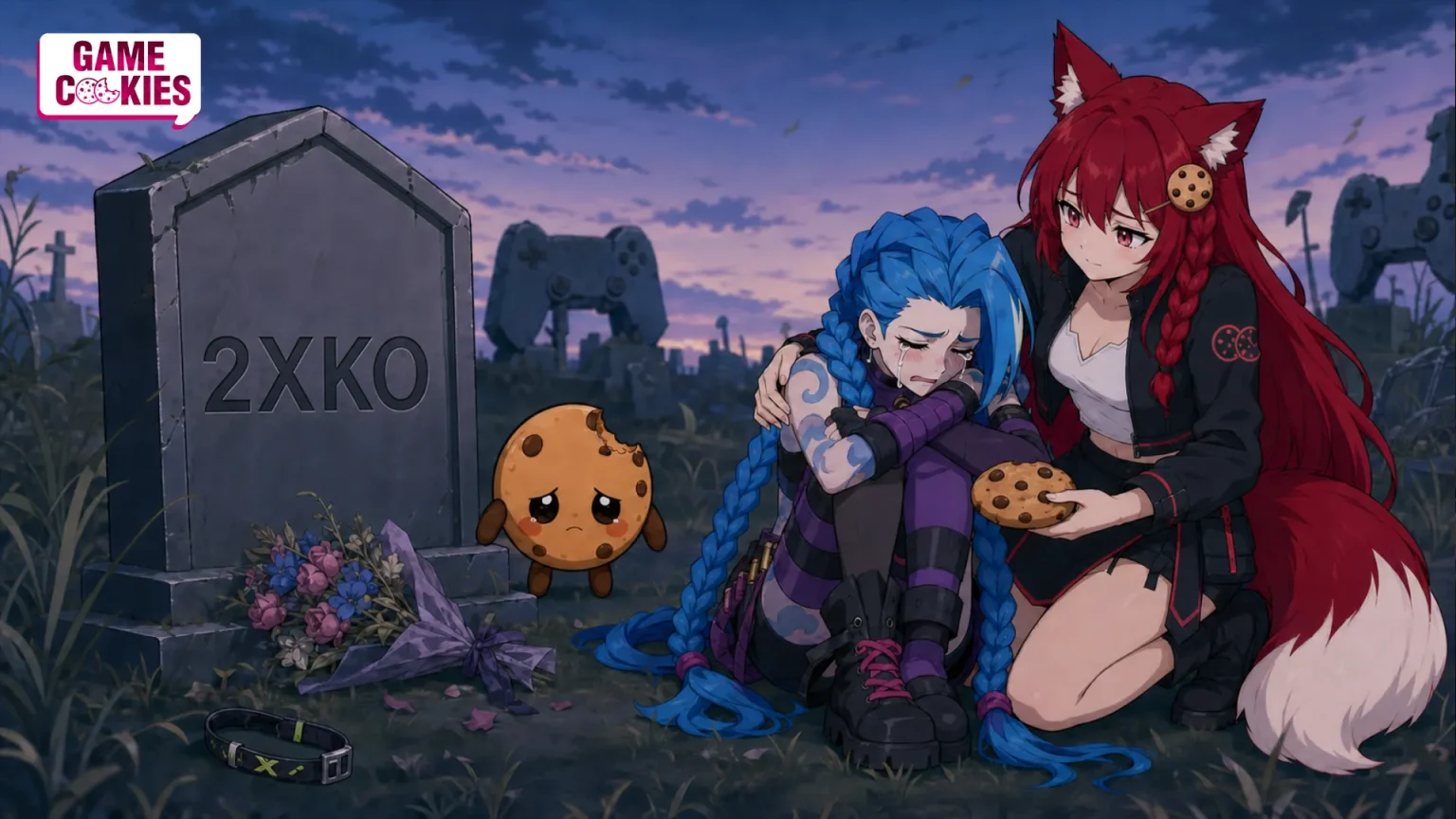
On August 21, former 2XKO senior game producer Patrick Miller published a long Patreon reflection about his decade on Riot’s fighting game. It landed one day after Riot announced that active development would end in December 2026. Screenshots spread with a cleaner and angrier story: the person in charge never cared about the game, ignored Riot’s request for a safer fighter, treated the project as a personal classroom, and gambled with the livelihoods of a huge team.
That viral version overstates Miller’s authority, invents a motive, and assigns him a development reset that available reporting does not place on his shoulders. His own essay still contains an extraordinary philosophy of corporate risk. The accurate version gives Kiki plenty to chew without feeding her claims the evidence cannot support.
What Patrick Miller actually wrote
Miller described roughly ten years across design and production work on core gameplay, metagame systems, lobbies, gameplay analysis, and live balance. He also wrote that he was often consulted while holding no leadership role with final accountability for the project. He explicitly warned readers that his essay was a personal reflection rather than a postmortem.
Then came the lines driving the backlash. Miller said profitability belonged to somebody else’s function. He preferred an “interesting failure” to a safe success, treated the experience like an advanced education, and argued that ambitious developers might as well take creative risks with “someone else’s money.” He recalled joking in meetings that “the worst thing that happens is that we all get fired.”
He also said a less ambitious 2XKO could probably have been more sustainable. His priority was the challenging fighting game he wanted to make and the knowledge gained while making it. That hierarchy is the real controversy: craft and learning sat above longevity, popularity, and commercial survival in his own account.
🦊 Kiki: “The worst thing that happens is that we all get fired.” What the hell kind of joke is that? Getting fired is a real-life fail state, minus the respawn. Rent still spawns next month. Groceries do not accept “interesting failure” as currency. Families cannot equip ten years of creative learning and use it to pay the electric bill. Miller got a decade of graduate school on Riot’s money. The people hit by the downside got severance paperwork. If your proudest defense of the gamble is that everybody might lose their jobs, congratulations: you found a way to make confidence sound like a payroll hazard.
🍪 Chip pushes a mug of tea between Kiki and the keyboard, then quietly moves the keyboard beyond flamethrower range.
The viral post promoted a producer into the executive chair
Miller was an influential senior producer, not the executive producer or the sole product owner. Riot identifies Tom Cannon as 2XKO’s executive producer, and Miller’s essay says final accountability sat elsewhere. Riot owned the budget, staffing, business model, release plan, and permission to continue.
The claim that Miller personally forced a mid-development reboot so he could learn also lacks support. Cannon has described killing an early version and returning to research and development because the team wanted combat that better expressed League of Legends and tag-team synergy, according to GamesRadar’s account of his 2025 interview. Project L was announced publicly in 2019, while Cannon joined Riot after the 2016 acquisition of Radiant Entertainment. A long and expensive development history is real. The available evidence frames the major reset as a team and leadership decision.
🦊 Kiki: Before anyone hands Miller the supervillain cape, Riot signed the budget, staffing, greenlights, and every extra lap around development. Miller did not operate a secret basement studio under the cafeteria. Executives heard the philosophy and kept funding it. Fine. Put two chairs in the accountability room. Miller can answer for turning everybody getting fired into the punchline of the risk. Riot can answer for approving the bet until the team paid the bill. My anger has room for co-op.
🍪 Chip sets down a second chair for Riot, then confiscates Kiki’s box of matches before the accountability meeting starts.
The jobs and the timeline are less dramatic than the meme, and more concrete
2XKO entered PC early access on October 7, 2025, then began its first console season on January 20, 2026. Less than three weeks later, Riot reduced the team. PC Gamer reported about 80 roles, described by Riot as a little under half of the group. Riot said affected employees would receive at least six months of notice pay and severance and could apply for other internal roles.
On August 20, Riot said active development would end in December. Servers would remain online, Lux and Samira would be the last champion releases, ranked mode and battle passes would go away, purchases would be refunded, and previously earned or purchased content would remain available.
Riot’s explanation was unusually direct. Dedicated tag-fighting players loved the game, but other fighting-game players did not stay. The company evaluated revenue, retention, engagement, and new-player acquisition, tried changes, and saw no sustained improvement. Operating costs remained substantially higher than revenue. Riot considered a smaller team, a different business model, and slower updates before choosing to stop active development.
🦊 Kiki: There it is. The punchline came back with about 80 names attached. Maybe Miller could afford to get fired. Maybe some of those workers could not. A job loss can mean rent, healthcare, family plans, immigration status, or months of panic. You do not get to joke about the cliff when other people are strapped into the back seat and nobody showed them the route. “Interesting failure” is a lovely souvenir for the person who keeps the lesson. Everybody else received the invoice.
🍪 Chip wraps both arms around Kiki’s ankle and points urgently at the sign marked PROFESSIONAL EDITORIAL POSTURE.
⭐ Byte: Confirmed figures: reporting placed the February reduction at about 80 roles, a little under half of the 2XKO team. Miller described roughly ten years on the project. Riot has not published the total budget, exact revenue, complete headcount history, player totals, or the financial effect of every reset. What the numbers measure: 80 is a reported role count from one reduction. It does not establish how many people worked on the project across its full history. Ten years describes Miller’s tenure and the project’s long history, not ten years under one publicly documented design. Interpretation: the verified scale is already serious. Inflating it only makes the accountability case easier to dismiss.
Creative risk becomes ugly when the downside is borrowed
There is a fair defense of Miller. A senior game producer can focus on making the product excellent while executives, finance teams, and publishing leaders own profitability. Fighting games also need people willing to resist copying Street Fighter, Tekken, or Guilty Gear Strive. A safer game can disappear just as efficiently as a daring one.
Miller’s essay crosses a different line when it celebrates insulation from the consequences. The knowledge he gained belonged to him. The financial risk belonged to Riot. The employment shock spread across artists, designers, engineers, quality assurance, production, live-service specialists, and their households. Those parties did not receive equal control over the gamble.
His post does acknowledge sadness, gratitude, and the talent of the team. It offers no basis for saying he enjoyed harming colleagues or felt nothing about their losses. The criticism can stay severe and precise: treating mass dismissal as the funny worst case makes other people’s exposure sound like scenery in one creator’s education story.
🦊 Kiki: I am not asking for beige design-by-committee or Street Fighter with the serial numbers sanded off. Take risks. But “risk” is not a magic word that converts coworkers into expendable test data. Own the studio? Spend your money. Tell the team exactly how wild the bet is and let them choose it with you. Working inside a giant company? Demand milestones, audience tests, a cost ceiling, a backup plan, and enough runway for the people whose salaries depend on your beautiful experiment. You want creative freedom? Great. Creative responsibility comes in the same box. Stop trying to return half the product.
🍪 Chip gently lowers Kiki’s flamethrower and replaces it with a binder labeled MILESTONES, CONSENT, AND A BACKUP PLAN.
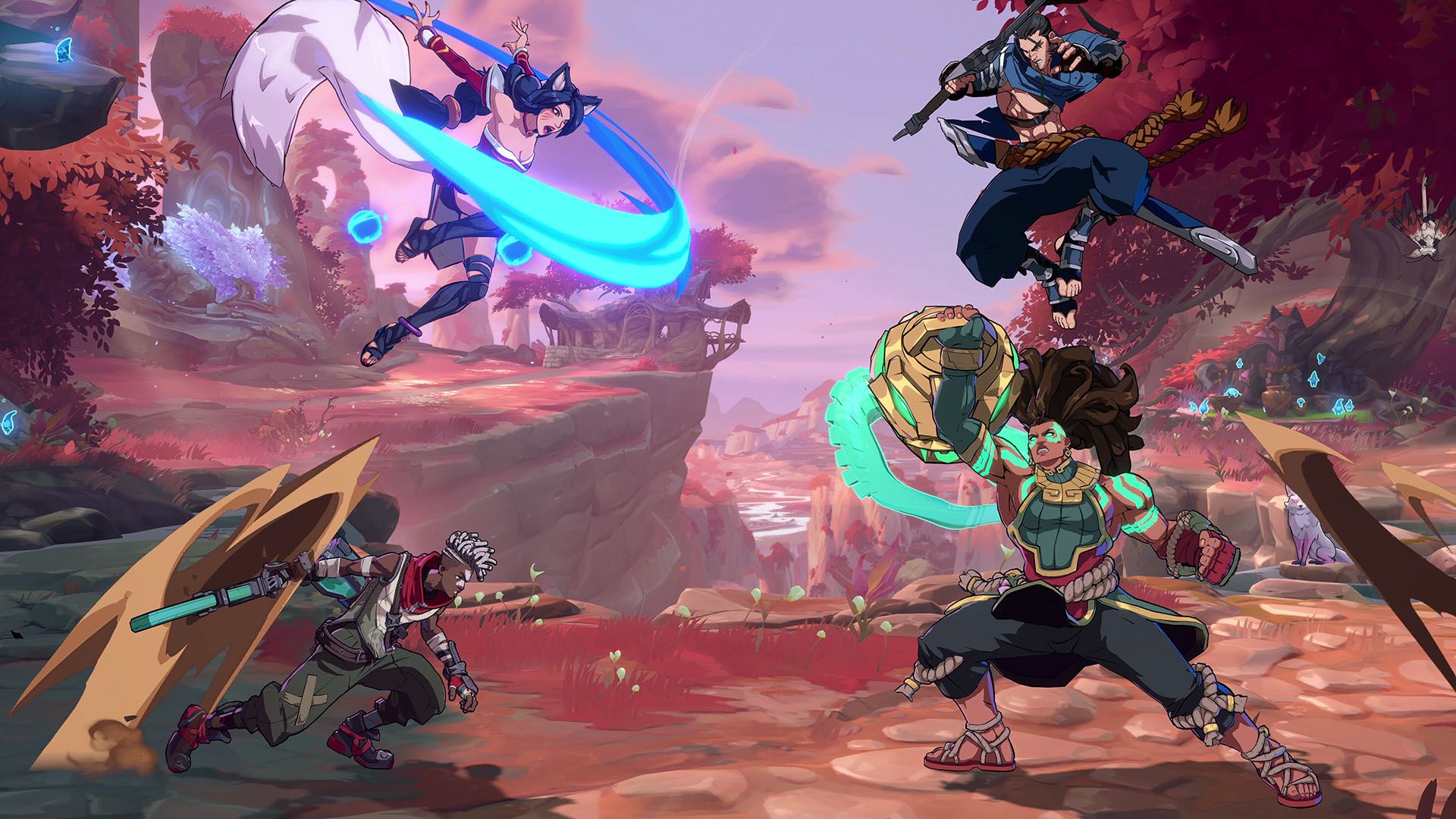
Riot owned the parachutes
Miller’s philosophy deserves the spotlight because he published it. Riot’s leaders deserve the larger accountability because they had the authority to convert philosophy into a decade of staffed production. They approved the creative direction, team scale, free-to-play model, launch timing, and operating plan. They also decided when the commercial evidence justified layoffs and when continued development no longer made sense.
Riot’s February update said the reduction was not a judgment on the talent or contributions of affected employees. The August explanation admitted that the product never reached the minimum audience needed to sustain its cost. Together, those statements describe a management failure with many authors, followed by workers absorbing the sharpest correction.
Blaming one producer offers a satisfying villain and a useless diagnosis. The better questions concern decision rights: Who owned the commercial gates? What evidence kept the team at that scale? When did retention miss the threshold? How much runway protected staff after launch? Which risks were shared with the people who could lose their jobs?
🦊 Kiki: So yes, Miller’s confidence pisses me off. He is not the only person responsible, and correcting the viral lie still matters. His actual words are bad enough. Riot owned the table. Miller publicly celebrated the bet. Workers supplied the chips without equal control over the wager. Then the guy who kept the ten-year education says he would mostly do it again after other people absorbed the career damage. Do it again with your studio, your money, and a team that knowingly chooses the moonshot. Do not stand beside a corporate crater and describe the blast as a valuable learning experience. The workers were colleagues, not tuition.
🍪 Chip wraps both arms around Kiki, plants both little legs, and begs the editor to hit Publish before she finds a sixth paragraph.
In the end…
The viral post gets Miller’s title, motive, and personal control wrong. His own account still reveals a serious failure of responsibility: he celebrated creative risk, personal learning, and proud failure while describing commercial survival as another function and dismissal as the worst-case joke.
Riot made the operating decisions around that creative ambition: it funded the project, approved its direction, launched it, cut about 80 roles, and ended active development after revenue and retention failed to sustain the cost. The layoffs belong in the story as people affected by decisions, not ammunition for an inflated meme.
Creative ambition deserves protection. So do the people asked to build it. Any company demanding one without designing for the other is gambling with chips that belong to somebody else.
⚙️ Stay suspicious when corporate risk is described by the person with the softest landing.
⚙️ Keep creative ambition, commercial gates, and employment consequences in the same conversation.
⚙️ And remember: if everybody can get fired, the experiment needs more than a cool thesis statement.
🦊 Kiki · 🍪 Chip · ⭐ Byte · 🦁 Leo
Should studios publish clearer exit gates for decade-long creative bets? Contact us here!
Follow Game Cookies on social.
Daily bites on the platforms you already scroll. Pick your poison.